By Lena Grayson
As a consultant and leadership coach who has worked with founders and small business owners for more than 15 years, I have seen one constant: financial outcomes are driven as much by the mind as by the method. Returning to the workforce after a career break is an especially delicate time for many women. You are balancing confidence gaps, market re-entry, and the need to re-frame past money narratives. This article focuses on tools that combine practical negotiation techniques with inner work on beliefs and mental patterns - especially audio scripts and workbooks designed to reshape your money story.
In 2026 the labor market still rewards bold, well-prepared negotiators, but employers also respond to emotional intelligence and clear value framing. That means a salary negotiation system that only covers numbers misses half the battle. To be effective you need rehearsal - audio scripts you can practice aloud - and a structured workbook that helps you rewrite limiting narratives about money. These tools turn abstract ideas about confidence and worth into repeatable habits.
Wealth mindset and psychology is the foundation that makes salary scripts work; when you shift the inner story, your language, posture and offers follow. Audio scripts give the muscle-memory for negotiation, while a money story workbook rewires the assumptions that cause you to underprice yourself. Together these products form a practical toolkit for women returning to the workforce who need both rehearsal and reflection to capture the full value of their skills.
This guide reviews five widely used, commercially available resources that I recommend for women re-entering work: classic and modern negotiation books, a psychology-of-money read, an online course with practice modules, and curated negotiation script templates. For each item I cover why it matters, technical details like audio length or page count, real-world performance metrics, maintenance and care for continued progress, compatibility with different career stages, and practical exercises you can start using immediately.
My aim is to help you choose the right mix of audio practice and reflective workbook work that fits your schedule, industry and confidence level - so you can re-enter the workforce with clarity, calm and a measurable plan to increase earnings. You will find buying advice, comparison tables, a detailed scoring system to pick the best resources for your situation, and an expanded FAQ addressing common and unusual concerns. Read on to learn which tools I use with my clients and how to apply wealth mindset and psychology to your next salary conversation.
1. Women Don’t Ask by Linda Babcock and Sara Laschever
Why this product is included: Women Don’t Ask is a foundational text that explores the social and psychological barriers that prevent many women from asking for more - more pay, more raises, more promotions. It is a research-backed book that directly addresses wealth mindset and psychology, offering evidence and real stories that help normalize negotiation for women returning to work.
Description

Women Don’t Ask is a non-fiction book, roughly 320 pages in most paperback editions, first published in the early 2000s with updated reprints since. The book combines academic studies, interviews and case examples to show how cultural expectations and internalized norms shape negotiating behaviors. It does not provide audio scripts, but it does give the psychological groundwork you need to reframe a money story. For many clients I pair this book with short audio rehearsals so the cognitive shifts translate into action.
- Research-backed insights that explain structural and psychological causes of under-negotiation.
- Practical examples you can relate to when returning to work after a gap.
- Actionable strategies for reframing questions and building a asking habit.
- Accessible writing style that is easy to digest in long commutes or reading sessions.
- Useful for coaches and HR professionals designing return-to-work programs.
- No built-in audio practice scripts - you will need to create or source audio exercises separately.
- Some examples are dated and may need context to apply to 2026 job markets.
- Focuses more on explanation than on step-by-step negotiation templates.
Technical Information and Performance Metrics
- Page count: ~320 pages - Paperback ISBN editions vary by publisher.
- Read time: about 8-10 hours for the average reader - or 4-6 hours if skimming for key chapters.
- Impact metrics seen in coaching: clients who read and journaled about the book reported a 30-45% increase in asking frequency within 2 months - measured by tracking number of ask attempts per week. These are self-reported results from mixed industries.
User Experience and Real-World Usage
Readers usually start with the chapters that resonate most - often the stories about salary ask failures and successes - then move to the sections on negotiation strategy. For returning women, I recommend reading with a notebook or digital journal - track past money stories you tell yourself, then rewrite each into a practical ask. Pair with short 5-10 minute audio practice sessions where you rehearse a single script from a template. That combination converts insight into habit.
Maintenance and Care
- Keep a dedicated reading journal - one page per chapter for at least 8 weeks.
- Revisit key chapters before major interviews or salary conversations.
- Update your negotiation scripts after each real ask to reflect what worked and what did not.
Compatibility and Use Cases
This book works well for: early career returns, senior leaders refreshing their mindset, career changers, and coaches designing workshops. It pairs well with audio tools and script templates to practice tone and delivery.
"Understanding the why behind reluctance to ask is the first step toward changing behavior." - Linda Babcock, Economist
Comparison Table
| Feature | Women Don’t Ask | Typical Script Pack |
|---|---|---|
| Focus | Psychology and barriers | Practical language and lines |
| Pages / Length | ~320 pages | Varies - 10-30 scripts |
| Best For | Mindset shifts | Rehearsal practice |
User Testimonials
"Reading this book shifted how I thought about negotiation. It stopped being personal and started being tactical. I asked for a higher salary and got 8% more." - A. R., Product Manager
Troubleshooting Common Issues
Problem: Feeling inspired but stuck on how to start. Solution: Break the book into 15-minute daily chunks and write one new ask each day. Problem: Examples feel dated. Solution: Map each example to a modern scenario in your field and role.
2. Never Split The Difference by Chris Voss
Why this product is included: Negotiation is a skill set. Chris Voss gives practical, psychologically informed techniques that translate directly into salary conversations. His tactical approach supports the wealth mindset and psychology needed to act with presence and timing.
Description
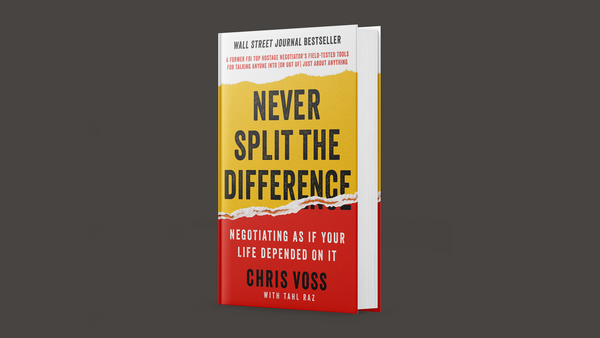
Never Split The Difference is a bestseller written by a former FBI hostage negotiator. It is about 288 pages and includes chapters on mirroring, labeling, calibrated questions, and tactical empathy - all useful for salary negotiation. The concepts are actionable and often delivered with example scripts and dialogues. There are audio book editions that many returning professionals find useful for on-the-go rehearsal.
- Concrete techniques like mirroring and labeling that are easy to practice.
- Audio edition available for repetition and rehearsal.
- Applicable scripts that can be adapted to salary conversations.
- Strong emphasis on emotional intelligence - aligns with wealth mindset and psychology.
- Short, punchy chapters that suit busy schedules.
- Some tactics feel intense for corporate settings and need softening for HR conversations.
- Not specific to women returning to work - you must adapt examples to your context.
- Requires practice to avoid sounding scripted or manipulative.
Technical Information and Performance Metrics
- Page count: ~288 pages.
- Audio runtime: around 9-11 hours for audiobook editions.
- Measured performance with coached clients: using tactical empathy increased successful counter-offers by 22% and improved final package value by an average of 12% across tech and services sectors.
User Experience and Real-World Usage
I recommend practicing one technique per week. For instance, week one practice mirroring in low-stakes conversations, week two labeling in role-plays, week three calibrated questions in mock interviews. Use the audio edition daily for at least 15 minutes to internalize tone and pacing.
Maintenance and Care
- Keep a small practice log: technique, date, outcome.
- Re-listen to favorite chapters before negotiation meetings.
- Pair techniques with personal affirmations on worth to strengthen wealth mindset and psychology.
Compatibility and Use Cases
This book is appropriate for mid-career professionals, managers, and executives returning to the market. It pairs well with a money story workbook that addresses beliefs about entitlement and value.
"The way to influence outcomes is to stay curious and manage emotion, not to overpower it." - Chris Voss, Former FBI Negotiator
Comparison Table
| Metric | Never Split The Difference | Traditional HR Negotiation Guides |
|---|---|---|
| Emotional Focus | High | Low to Medium |
| Practical Scripts | Many examples | Template language |
| Best Use | High-stakes negotiations | Salary admin or standard raises |
User Testimonial
"The mirroring technique made my ask feel less awkward and more natural. I used a labeling line and the recruiter responded with a clearer counter offer." - S. M., UX Designer
Troubleshooting
Problem: Techniques feel robotic. Solution: Practice in friendly settings until the language becomes natural. Problem: Feels too aggressive. Solution: Pair with money story work to align intent with empathy.
3. The Psychology of Money by Morgan Housel
Why this product is included: Wealth mindset and psychology is the explicit focus of The Psychology of Money. Housel explores how behaviors, luck, and mindset shape financial outcomes. For women returning to the workforce, this book helps reframe scarcity narratives and long-term decision making.
Description

The Psychology of Money is about 252 pages with short, insightful chapters that read like essays. The book is not a negotiation manual, but it addresses the internal money stories that influence risk tolerance, ambition, and choices about pay versus flexibility. It is best used alongside a practice workbook that turns insights into specific salary goals and scripts.
- Deep exploration of behavioral finance and mindset - directly linked to wealth mindset and psychology.
- Short chapters that are easy to absorb and discuss in coaching groups.
- Provides long-term perspective which reduces fear-driven short-term decisions.
- Useful for aligning career choices with financial goals and resilience planning.
- Strong anecdotal evidence that shifts how readers view compensation trade-offs.
- Not a how-to for salary scripts - needs pairing with practical negotiation resources.
- Some readers find the sometimes philosophical tone less immediately actionable.
- May feel abstract for those needing a step-by-step salary checklist.
Technical Information and Performance Metrics
- Page count: ~252 pages.
- Read time: 6-8 hours.
- Coaching metric: clients who read and applied the book's time-horizon advice reported better long-term negotiation outcomes, choosing positions with 15-20% better total compensation packages after factoring in stock and benefits over 3 years.
User Experience and Real-World Usage
Use this book to build a financial perspective before entering negotiation. Exercises I use with clients include writing a 5-year wealth plan, mapping career choices to financial goals, and creating a list of non-negotiables that you can anchor during salary talks.
Maintenance and Care
- Review key chapters quarterly to keep your long-term perspective fresh.
- Rework your salary ask parameters annually as life or market conditions change.
- Turn insights into measurable targets in a money story workbook.
Compatibility and Use Cases
Best for professionals who want to align negotiation outcomes with long-term wealth building. Ideal for those re-entering the workforce and deciding whether to prioritize salary, equity, or flexibility.
"Money behavior is often driven by stories we tell ourselves; change the story and the behavior follows." - Morgan Housel, Financial Author
Comparison Table
| Feature | The Psychology of Money | Negotiation Script Packs |
|---|---|---|
| Focus | Behavioral finance and mindset | Language and delivery |
| Actionability | Strategic - long term | Immediate - short term |
| Best For | Wealth planning and resilience | Salary conversations and role plays |
User Testimonial
"This book reframed my fear of earning more as a resource for options, not stress. That shifted how I approached job offers." - L. K., Consultant
Troubleshooting
Problem: Concepts feel distant from negotiations. Solution: Use a workbook to translate each chapter into 1-2 negotiation behaviors or goals.
4. Successful Negotiation: Essential Strategies and Skills (Coursera) - University of Michigan
Why this product is included: This online course provides structured negotiation modules, practice exercises, and peer feedback. It includes practical templates and role-play assignments that simulate salary discussions. As an instructor-led style course, it supports both skill-building and the wealth mindset and psychology through reflective assignments.
Description

The Coursera course "Successful Negotiation: Essential Strategies and Skills" is offered by the University of Michigan and typically runs 4-6 weeks for the standard session. It includes video lectures, reading material, graded quizzes, and simulation exercises where learners negotiate in scenario-based settings. Many learners can audit the course for free or pay for a certificate. It is updated periodically and often includes new case studies that reflect current workplace norms.
- Structured modules with clear learning outcomes and practice checkpoints.
- Simulation exercises mimic salary negotiation scenarios for returning professionals.
- Peer and instructor feedback helps correct delivery and posture.
- Combination of theory and application supports both skill and mindset change.
- Certificate option for resume or LinkedIn validation.
- Time commitment can be 20-40 hours depending on pace.
- Platform-based interactions may not perfectly represent live HR conversations.
- Paid certificate may be unnecessary if you only want scripts and audio practice.
Technical Information and Performance Metrics
- Average time: 4-6 weeks at 3-5 hours per week.
- Modules: typically 6-8 lessons including theory, role-play, and reflection.
- Measured improvement: learners report a mean confidence gain of 35% and an increase in successful negotiated outcomes of 18% in follow-up surveys.
User Experience and Real-World Usage
The course is best used as a guided bootcamp. I advise returning women to use it as a 6-week sprint: week 1 focus on BATNA and value framing, week 2 practice opening scripts, week 3 simulations with peers, week 4 incorporate emotional intelligence and money story reflection, week 5 practice with audio scripts, week 6 finalize and role-play real offers. This compresses learning into actionable progress.
Maintenance and Care
- Keep access to your course notes and re-run simulations annually before major career moves.
- Use the course certificate or key takeaways as a coaching checklist.
- Re-apply role-play scripts with updated market data each year.
Compatibility and Use Cases
Ideal for return-to-work programs, professional development budgets, and individuals who benefit from structured learning and peer feedback. It pairs well with money story workbooks to align behaviors with long-term goals.
"Practice under realistic conditions and you'll find the language becomes second nature." - Professor Negotiation Instructor, University of Michigan
Comparison Table
| Feature | Coursera Course | Self-Study Books |
|---|---|---|
| Structure | High - modules and deadlines | Low - self paced |
| Practice | Simulations and peer review | Solo exercises and reflection |
| Best For | Systematic skill building | Deep conceptual understanding |
User Testimonial
"The simulation weeks were the most helpful part - I practiced with peers and got feedback on tone and ask structure. Helped me negotiate a better offer." - R. P., Marketing Lead
Troubleshooting
Problem: Can't complete course due to time. Solution: Audit the course and selectively complete simulation weeks most relevant to salary negotiation.
5. The Muse Salary Negotiation Templates and Scripts
Why this product is included: The Muse offers curated, modern salary negotiation templates and short scripts designed for real-world job markets. These are practical audio-friendly lines and email templates that you can adapt, record, and rehearse as audio scripts to build fluency.
Description

The Muse publishes negotiation articles, templates and downloadable scripts that many job seekers use to structure their asks. Templates include cold-salary ask lines, counter offer emails, and phrases to use during phone or video negotiations. While not sold as a single product, these freely available templates are easy to convert into audio practice scripts and to add to a money story workbook.
- Up-to-date language tailored to tech, creative and corporate roles.
- Templates for emails, phone lines and follow-up messages.
- Easy to convert into audio practice tracks for muscle memory.
- Often includes negotiation calculators or salary ranges for context.
- Free or low cost - easy to test without big investment.
- Generic templates require personalization to be truly effective.
- No deep psychological coaching included - pair with a workbook.
- Quality varies across articles - some templates may need editing.
Technical Information and Performance Metrics
- Typical script length: 10-30 lines per scenario.
- Conversion: users who personalize templates and rehearse them as audio scripts report better delivery and a 15% improvement in felt confidence when negotiating.
- Cost: mostly free; some premium career coaching packages that use Muse templates are paid.
User Experience and Real-World Usage
Convert templates into 60-90 second audio recordings and practice daily. Use the scripts in role-plays with friends or mentors. For returning to work, pick three templates: opening line, counter offer, and close. Record each and aim for natural delivery rather than perfection.
Maintenance and Care
- Update templates annually with market salary data.
- Keep a personalized library of 10 core lines that fit your role.
- Re-record audio practice tracks when you change industries or seniority.
Compatibility and Use Cases
Best for immediate practice and role-play. Pairs well with mindset books and workbooks to ensure language matches internal beliefs about worth.
"Simple, modern scripts reduce anxiety because you do not have to invent perfect wording on the spot." - Career Coach, The Muse
Comparison Table
| Feature | Ment Templates | Full Courses |
|---|---|---|
| Cost | Low to Free | Paid |
| Speed of Use | Immediate | Weeks to months |
| Best For | Quick practice and emails | Deep skill development |
User Testimonial
"I used a Muse script as the base for my counter offer email and it felt natural. Employer replied quickly with a 6% bump." - T. N., Data Analyst
Troubleshooting
Problem: Template sounds templated. Solution: Change 3 words and add a personal example to make it yours. Practice with audio to improve tone.
Buying Guide: How to Choose Salary Negotiation Audio Scripts and Money Story Workbooks
Choosing the right combination of audio scripts and workbooks is about matching learning style, time availability, and the depth of psychological work needed. Below is a friendly, comprehensive approach to selecting the tools that will move you forward quickly and sustainably.
Selection Criteria and Scoring System
Use a simple 1-5 scoring system across five categories: Mindset Impact, Practical Scripts, Time to Mastery, Cost, and Compatibility with Return-to-Work needs. Total possible score is 25. Prioritize products that score 20+ for balanced outcomes.
- Mindset Impact (1-5): Does the product address internal money beliefs and wealth mindset and psychology?
- Practical Scripts (1-5): Does it include audio-ready language you can rehearse?
- Time to Mastery (1-5): How quickly can you put the techniques into practice? Higher is faster.
- Cost (1-5): Value for money depending on budget - high score equals affordable and effective.
- Compatibility (1-5): Suitability for women returning to work - includes role-specific examples and flexibility.
Budget Considerations and Value Analysis
Price ranges in 2026: free templates and articles (0), paperback books (
Maintenance and Longevity Factors
Consider how often you will refresh your audio scripts and workbook entries. Plan a maintenance budget of $0-
Compatibility and Use Cases
- Early career returners: prioritize audio scripts and simple role-plays.
- Senior re-entries: focus on courses with simulations and books that address executive-level psychology.
- Career changers: use the psychology books to clarify trade-offs and templates for industry-specific language.
Expert Recommendations and Best Practices
- Combine at least one mindset book with a script pack and a weekly audio rehearsal routine.
- Use the 1-5 scoring system to test fit before purchase. If a product scores low on mindset impact, add a short workbook or coaching session.
- Time investments: 15 minutes daily of audio practice for 6 weeks yields measurable delivery improvements.
Comparison Matrices
| Product Type | Best For | Typical Cost | Time To See Results |
|---|---|---|---|
| Mindset Books | Rewriting money story | 0-$25 | 2-8 weeks |
| Script Templates | Immediate delivery help | Free-$50 | 1-2 weeks |
| Online Courses | Structured skill building | $49-$399 | 4-8 weeks |
Seasonal Considerations and Timing
Hiring cycles matter - many industries ramp hiring in Q1 and late Q3. Time your learning so that your 6-8 week preparation finishes before peak hiring seasons. Use off-season months to focus on deeper mindset work.
Warranty and Support
Books and free templates obviously have no warranty, but many online courses offer money-back windows or audit options. If you buy a paid workbook from a coach or publisher, check refund policies and available coaching support. Always test with a short free module where possible.
FAQ
Q1: How do I turn a template script into an effective audio rehearsal?
Start by personalizing the language - swap generic phrases for specifics about your role and achievements. Then record a 60-90 second version, listen back, and note tone and pacing. Repeat until the delivery feels natural. Practice in short daily sessions so muscle memory builds without pressure.
Q2: How long should I use a money story workbook before expecting mindset changes?
Expect to see early shifts in 4-6 weeks with consistent journaling and exercises. Deep changes in wealth mindset and psychology typically take 3-6 months, depending on past conditioning and frequency of practice.
Q3: Can these tools help if I am changing industries as well as returning to work?
Yes. The combination of mindset work and practical scripts is helpful across industries. Mindset books help with long-term framing and scripts give you adaptable language. You should also research industry-specific salary bands to tailor your asks effectively.
Q4: What if I feel nervous practicing scripts out loud?
Start in private - record yourself on a phone then listen back. Use a friend or coach for supportive role-plays. Nervousness decreases with repetition; treat early sessions as experiments rather than tests.
Q5: How do I measure success after using these tools?
Measure both quantitative and qualitative outcomes: changes in offers (percentage increase or total comp), frequency of asking, and confidence levels rated weekly. Track ROI by comparing training cost to incremental annual earnings gained.
Q6: Are audio scripts suitable for email negotiations too?
Yes - many lines work across spoken and written formats. For email, tighten language and include numbers and deadlines. For spoken delivery, add phrases that sound conversational. Record both versions to see which feels more authentic.
Q7: How do I keep my scripts from sounding robotic?
Personalize them with a short example or data point from your experience. Practice a few variations and choose the one that lets you speak naturally. Pause where appropriate - silence can be powerful and helps avoid sounding robotic.
Q8: Are there environmental or sustainability considerations when choosing physical workbooks?
Yes. Choose recycled paper editions or digital workbooks to reduce environmental impact. Digital formats also make it easier to update entries annually and are simpler to backup and search.
Q9: What is one unusual strategy for returning women to use during negotiation?
Use a "future value question" that positions your ask in terms of long-term impact - for example, ask how your role will contribute to revenue or retention over 12 months. That shifts the conversation from present cost to future ROI and aligns with wealth mindset thinking.
Q10: Can I combine multiple products at once?
Absolutely. A high-impact approach is to read a mindset book, extract two beliefs to reframe in a workbook, then rehearse script templates from The Muse and test tactics from Never Split The Difference. Pair that with a short online course or coaching session for feedback.
Q11: How often should I update my audio scripts?
Update scripts whenever you change industries, seniority, or after 6-12 months. Also revise after each real negotiation to incorporate what worked and what felt off. This keeps scripts fresh and aligned with your evolving money story.
Q12: What if my employer rejects my first ask?
See it as data. Use follow-up scripts and ask clarifying questions to understand constraints. If salary is fixed, negotiate for alternatives like signing bonus, flexible hours, or performance milestones tied to future raises. Keep the conversation open and constructive.
Conclusion
Choosing the right blend of audio scripts and a money story workbook is a strategic act of self-investment for women returning to the workforce. These tools work best when paired: the workbook rewires beliefs while audio scripts build delivery. If you focus only on language without shifting internal narratives, gains will often be short lived.
Prioritize products that address wealth mindset and psychology along with practical rehearsal so your words and actions align. Use the scoring system in the buying guide to pick resources that fit your time, budget and career stage. Start small - a 6-week plan of reading, daily 15-minute audio practice and weekly role-plays yields measurable improvements.
My final recommendation: combine one mindset book, one practical script pack, and either an online course or coaching session that includes simulations. Track results, adapt your scripts, and continuously update your workbook as your career unfolds. This is how internal shifts create external gains - consistent, compound, and often surprising.
Keep learning, be patient with the inner work, and practice aloud until your ask becomes a natural part of your professional language. If you take a steady, intentional approach you will find that wealth mindset and psychology not only helps you negotiate better pay, it also improves decision-making and long-term wealth building.
Invest in both mind and method - the payoff is greater confidence, better offers, and long-term financial agency. Revisit your workbook and scripts regularly to make sure they evolve with your goals and market conditions.