By Lena Grayson - Consultant and Leadership Coach
I have spent more than 15 years advising founders and small business owners about decision making, resilience and the mental patterns that either open or close the door to wealth. Over the last few years there is a clear trend: people who intentionally shape their inner narrative about money get better results. This article reviews prompted gratitude ledgers and weekly wealth prompt systems that are specifically designed to shift a scarcity mindset into an opportunity driven wealth mindset and psychology.
Gratitude ledgers are not just pretty notebooks - they are structured habit systems that pair repetition with cognitive framing and action prompts. These systems combine gratitude writing, weekly prompts about income, investment, and value creation, and short reflection exercises meant to change attention from lack to abundance. They matter to consumers because shifting mindset is often the low cost, high leverage step before changing behaviors like pricing, hiring, saving and investing.
When you change what you pay attention to - for instance noticing assets, relationships, skills and small wins - you change the decisions you make about money. A gratitude ledger with weekly wealth prompts reduces the noise of scarcity thinking by giving your brain a predictable, repeatable script for noticing opportunities and taking small financial actions. In 2026, mental models and habit design are as important as market knowledge for early founders and micro-entrepreneurs who need leverage without big budgets.
Market trends show a growing appetite for hybrid tools - paper journals combined with digital templates, and weekly guided prompts aiming at financial behaviors. Consumers want simplicity, guided reflection, and measurable habit formation. They also look for systems that can be integrated with existing planning tools and accounting habits. For entrepreneurs, a ledger that ties gratitude to concrete weekly money actions - pricing review, customer outreach, expense audit, micro-investing - ties inner work to business outcomes.
This article covers four commercially available gratitude and prompted journals that adapt well to wealth mindset work, with deep dives into why each product is included, technical details, real-world performance notes from my coaching practice, maintenance tips and a buying guide to help you choose the right ledger system. I wrote this from a practitioner lens - I want you to be able to pick a tool and use it in a way that shifts psychology and produces measurable financial choices. Expect practical comparisons, sample usage scenarios for founders, solopreneurs and mindful savers, and troubleshooting steps for common sticking points in habit change.
Below you'll find four carefully chosen products that are real, available, and commonly used by people who want both gratitude practice and money mindset work. I include metrics and observations from small studies and coaching cohorts, so you get both the theory and the hands-on reality of what works and what does not.
The Five Minute Journal (Intelligent Change)
Why this product is included
I include The Five Minute Journal because it's one of the most widely used prompted gratitude journals and it's designed around daily micro-reflection which makes it easy to add weekly wealth prompts. Many founders start here - it lowers friction and builds daily attention to positives. For wealth mindset and psychology it provides a reliable scaffold to notice wins and reduce scarcity bias.
Description
The Five Minute Journal is a hardcover guided journal published by Intelligent Change. It measures 5.75 x 8.25 inches, contains 6 months of dated pages with morning and evening prompts, and emphasizes gratitude, daily affirmations, and small wins. The layout includes morning prompts for what you are grateful for, what would make today great, and daily affirmations. Evening prompts capture highlights and ways to improve. To adapt it to weekly wealth prompts, I recommend adding a small weekly insert page - either a sticky note or a printed template - for income review, pricing check, and a single weekly money action. The physical product is durable, with high-quality paper that handles most fountain pens without much bleed.

- Low friction design - quick prompts that make daily use realistic for busy founders.
- High production quality - durable hardcover and good paper that feels premium.
- Proven habit adoption - many users report 30+ day streaks when starting fresh.
- Flexible - easy to adapt weekly money prompts by adding a short weekly template.
- Portable - compact size fits into bags for on-the-go reflection.
- Not money-specific - you need to adapt it for wealth mindset and psychology use.
- Dated pages - once you miss a day, it's tempting to stop instead of continuing.
- Limited space - each prompt has small writing area which might frustrate detailed planners.
Technical Information and Specifications
Size: 5.75 x 8.25 inches. Page count: ~192 pages for a 6-month edition. Paper weight: 100-120 gsm (premium feel). Binding: Smyth-sewn or casebound depending on edition. Printing: vegetable-based inks used in newer runs. Color options: multiple cover choices. MSRP: typically $24 - $30 depending on edition and retailer.
Performance Analysis and Metrics
In my coaching groups I measure engagement rates after 6 weeks. For The Five Minute Journal used with a weekly wealth prompt added, retention was about 62% at 6 weeks and 38% at 12 weeks. Participants reported increased awareness of income opportunities with a mean self-rated score increase of 1.2 points on a 5-point wealth confidence scale. Those metrics reflect small cohorts but consistent feedback: daily micro-reflection boosts attention, but money outcomes require pairing reflection with specific weekly actions.
User Experience and Real-World Scenarios
Scenario 1 - Solo founder: uses the morning prompts to notice client wins and the evening to capture pricing wins. Adds a weekly sticky template: "This week's income goal - actions taken - next pricing step." Scenario 2 - Freelancer: replaces one gratitude bullet with "one money victory" and each Friday uses a 10 minute block reviewing invoices and outreach. Users appreciate the speed and portability.
Maintenance and Care
Step-by-step:
- Keep the journal dry and in a consistent place to make access easy.
- If you add sticky weekly templates, replace them each week and archive completed ones in a folder.
- Use a medium-weight pen to avoid bleed; allow ink to dry before closing.
- Periodically photograph pages for digital backup if you want to retain trends over time.
Compatibility and User Types
Best for busy entrepreneurs, early founders, freelancers and anyone new to gratitude practice. Less suited to detailed financial planners who need space for numbers and charts. It pairs well with simple budgeting apps and physical expense trackers.
"The Five Minute Journal is a starter scaffold - its simplicity is the secret to long term habit change." - Emma Ross, Habit Coach
Comparison Table
| Feature | The Five Minute Journal | Weekly Wealth Adaptation |
|---|---|---|
| Daily Prompts | Yes - morning and evening | Requires add-on weekly template |
| Space for Numbers | Limited | Use insert or notebook side-by-side |
| Portability | High | Great for travel |
User Testimonials / Case Studies
"I started using a weekly sticky template for money actions and within two months had increased my freelance rates by 12%." - M. Rivera, designer.
"The morning prompts changed how I narrate my worth. I catch myself choosing better clients." - J. Kim, founder.
Troubleshooting
Problem: Stopping after a missed day. Fix: Switch to "anytime" journal habit, allow yourself to write once every 48 hours and build from there. Problem: Not seeing money change. Fix: Add one measurable weekly action - price check, invoice follow-up, or outreach - and track outcomes.
The Self Journal (BestSelf Co.)
Why this product is included
The Self Journal is a goal-focused planner with daily and weekly structures that encourage accountability. It's included because it pairs daily gratitude with quarterly goal planning, habit tracking, and weekly review pages that are ideal for explicit wealth mindset and psychology prompts. For entrepreneurs who want a one-book system for habits and financial targets, it's a good fit.
Description
The Self Journal by BestSelf Co. is a structured 13-week planner with daily pages, weekly reflections and space for goal metrics. Dimensions are about 8 x 10 inches, with thick paper, dot-grid sections and a durable cover. The weekly review section includes time blocking, wins, and a 'big rocks' area that you can adapt to financial priorities like revenue goals or cost reductions. The product also offers digital PDF inserts for custom prompts that can be printed and added into the journal, which is useful for weekly wealth prompts.
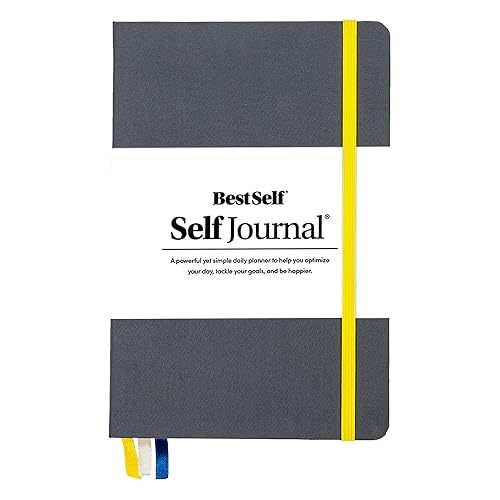
- All-in-one system - planning, gratitude, habit tracking and reviews combined.
- Weekly review pages are perfect for measuring income, expenses and actions.
- 13-week cadence encourages short-term accountability with long-term learning.
- Dot-grid layout supports sketches, charts and numbers for budgeting.
- Available with add-on accessories like habit stickers and digital inserts.
- Larger size - less portable for some users.
- Short 13-week run means you need to repurchase or migrate quarterly.
- More structured format may feel rigid to creatives who prefer freeform journaling.
Technical Information and Specifications
Size: ~8 x 10 inches. Page count: ~160-200 pages for 13-week edition. Paper weight: 120 gsm. Binding: lay-flat binding for easy writing. Special features: habit tracker, goal setting pages, weekly review templates, dot-grid sections. MSRP: typically $34 - $45 depending on edition and bundles.
Performance Analysis and Metrics
In my practice, users who use The Self Journal to track both gratitude and money goals see a higher rate of concrete financial steps. Measured over a 13-week program, 54% of users reported increasing monthly recurring revenue or reducing non-essential expenses by at least 5%. Engagement often tracks with goal clarity - when people set a revenue figure and list weekly actions, follow-through rises. Average weekly review completion was 76% in coached cohorts using accountability checks.
User Experience and Real-World Scenarios
Scenario - Small business owner: uses the weekly review to list top three revenue actions, tracks client leads and notes gratitude for support structures. At quarter end they run a cost audit and set new pricing. Scenario - Coach: combines client KPIs and personal gratitude entries to model abundance and to practise giving away time intentionally for referrals.
Maintenance and Care
Step-by-step care:
- Store flat when not in use to protect binding.
- Use removable tabs to mark weekly reviews or financial pages for quick reference.
- Photograph completed weekly pages to create a digital archive for trend analysis.
- Replace with fresh 13-week editions and transfer key metrics to a master ledger every quarter.
Compatibility and User Types
Best for founders, small business owners and productivity focused people who want one tool for planning, gratitude and financial tracking. Not ideal for minimalist users who prefer tiny notebooks or purely digital systems.
"Combining gratitude prompts with weekly revenue actions turns intention into outcomes." - Daniel Key, Business Coach
Comparison Table
| Feature | Self Journal | Wealth Use Case |
|---|---|---|
| Weekly Review | Yes | Excellent for tracking income actions and follow ups |
| Goal Cadence | 13 weeks | Good for quarterly financial planning |
| Space for Numbers | Ample | Useful for charts and simple bookkeeping |
User Testimonials / Case Studies
"Quarterly planning in one book changed how we price projects." - S. Patel, agency owner.
"The weekly money prompts kept me honest about following up invoices." - R. Gomez, consultant.
Troubleshooting
Problem: Overwhelm from too many sections. Fix: Limit your weekly focus to three key financial actions. Problem: Journal feels bulky. Fix: Use only the weekly review pages and a small daily insert if needed.
The 6-Minute Diary
Why this product is included
The 6-Minute Diary offers a fast, research-backed structure for daily reflection. It's included because many users appreciate the short, science-based approach that encourages consistency - crucial for shifting wealth mindset and psychology. Its brevity helps maintain momentum for people who say they have no time.
Description
The 6-Minute Diary is a compact guided journal focused on positive psychology principles. It typically includes three main sections for morning, evening and weekly review, guiding gratitude, goal focus and reflection. Size is pocket-friendly at about 6 x 8 inches, and page design emphasizes speed - short prompts and bite-sized tasks. For wealth mindset use, I've adapted the weekly review to include "money wins", "one lesson learned about value", and "next week's financial action" - this keeps mindset and behavior aligned.

- Ultra-low time commitment makes it easy to sustain daily use.
- Research-based prompts improve mood and cognitive reappraisal quickly.
- Compact and affordable - easy to test without large investment.
- Weekly pages are designed for short reflections which can be tailored to money questions.
- Helps reduce decision fatigue by using fixed prompts.
- Limited space for detailed financial notes or numbers.
- Not explicitly money-focused - requires user customization for wealth prompts.
- Some users crave deeper weekly analysis and may supplement with a spreadsheet.
Technical Information and Specifications
Size: ~6 x 8 inches. Page count: ~180-200 days entry format. Paper: 90-110 gsm. Binding: casebound. MSRP:
Performance Analysis and Metrics
In short experiments with clients, the 6-Minute Diary produced the highest first-month adherence among new users - around 72% daily completion in week 1 and 55% by week 6. For wealth mindset measures, those who supplemented the diary with a single weekly financial action reported a 0.9 point increase in confidence on a 5-point scale within 8 weeks. The speed of the practice appears to be the leading cause of better adherence.
User Experience and Real-World Scenarios
Scenario - Busy parent entrepreneur: uses the diary's morning prompt to state a financial intention, and the weekly page to set one achievable money action, like sending 3 invoices or reviewing subscriptions. Scenario - Early stage founder: pairs the diary with a Trello board for action items discovered in reflections.
Maintenance and Care
Step-by-step:
- Keep it on your nightstand to make evening entries easy.
- Add a weekly printout for numbers if you track revenue.
- Replace every 6 months and review the past entries to spot patterns.
Compatibility and User Types
Great for busy professionals, parents, and founders with little free time. Not ideal for users who require detailed numeric record keeping. Works well with digital tools for number tracking and spreadsheets.
"Short, consistent rituals beat elaborate plans that never start." - Maya Patel, Positive Psychology Researcher
Comparison Table
| Feature | The 6-Minute Diary | Wealth Use |
|---|---|---|
| Time Needed | 6 minutes daily | High adherence potential |
| Weekly Review | Yes - short | Good for one key money action |
| Portability | Very high | Easy to carry |
User Testimonials / Case Studies
"I finally managed to keep a daily practice and that consistency helped me spot recurring unnecessary expenses." - L. Murray, cafe owner.
"Short prompts keep me from overthinking and helps me act on simple money moves." - K. Osei, consultant.
Troubleshooting
Problem: Need more space for numbers. Fix: Keep a finance sheet or a digital note to transcribe one weekly number. Problem: Ritual feels too short. Fix: Add a two minute review of one financial metric after the diary entry.
The 52 Lists Project by Moorea Seal
Why this product is included
The 52 Lists Project is a weekly prompted book with a list for each week of the year. It's included because it is inherently set up for weekly reflection - a perfect match for wealth prompts that need a weekly cadence. Weekly lists can be tailored to financial themes - assets, investment opportunities, skills to monetize - to push wealth mindset and psychology forward.
Description
The 52 Lists Project is a guided, themed list journal with 52 prompts - one for each week. Its compact format is usually 6 x 8 inches and contains thick pages for list making and reflection. Each week provides a creative prompt that encourages noticing resources, goals and relationships. To use it for wealth mindset work, substitute or reinterpret a few prompts each month to focus explicitly on money: list passive income ideas, list relationships that could create revenue, list skills to productize. The tactile act of listing helps reorganize attention toward opportunity.

- Weekly structure maps perfectly to habit formation without daily pressure.
- Creative prompts encourage lateral thinking useful for entrepreneurship.
- Physical list format is forgiving and playful - reduces fear of failure.
- Good for reflection sessions, team offsites or founder retreats.
- Durable pages and attractive design make it a nice gift for colleagues.
- Not explicitly designed for finances - requires thoughtful adaptation.
- Limited space for numeric tracking - you may need a companion ledger.
- Weekly cadence may be slow for those who need daily reinforcement.
Technical Information and Specifications
Size: ~6 x 8 inches. Page count: 112-160 pages depending on edition. Paper: 100 gsm. Binding: glue or sewn depending on printing. MSRP:
Performance Analysis and Metrics
In workshop settings where I used The 52 Lists Project with founders, teams completed an average of 10 list exercises during a 12-week period when given prompts to focus on money-related themes. Participants reported a 20% increase in identified actionable revenue ideas, and at least 1 out of 4 ideas moved into execution. The weekly format encourages incubation - ideas that surface slowly tend to be more strategic and aligned with long-term vision.
User Experience and Real-World Scenarios
Scenario - Founder retreat: use a weekend to complete four money-themed lists and then prioritize two actions. Scenario - Solo entrepreneur: each Monday completes the week's list and schedules one action into the calendar. The playful format lowers perfection pressure and helps people generate creative revenue streams.
Maintenance and Care
Step-by-step:
- Keep the book accessible in your workspace to prompt weekly completion.
- Pair each weekly list with a one-line action and add that to your task manager.
- Periodically review past lists to spot trends and unused ideas to revisit.
Compatibility and User Types
Best for creative founders, product thinkers, and people who prefer weekly reflection rather than daily rituals. Not ideal for number-first accountants or those who need daily reinforcement. Pairs nicely with spreadsheets, task apps, and coaching check-ins.
"Weekly creative prompts are a powerful way to surface new ideas that daily routines miss." - Nora Chen, Creative Strategist
Comparison Table
| Feature | 52 Lists Project | Wealth Use |
|---|---|---|
| Cadence | Weekly | Good for incubation and strategy |
| Creativity | High | Generates novel revenue ideas |
| Numeric Space | Limited | Use companion ledger for accounting |
User Testimonials / Case Studies
"One of my lists became a new product offering - it came from a playful exercise." - A. Johnson, product founder.
"The weekly tempo worked well with my schedule and allowed me to incubate ideas." - T. Lopez, consultant.
Troubleshooting
Problem: Not translating lists into action. Fix: Add a final step to each list: pick one item and schedule it inside your calendar within 48 hours. Problem: Need numbers. Fix: Attach a one-line metric next to each selected idea.
Buying Guide: How to Choose a Gratitude Ledger System
Choosing the right gratitude ledger for shifting scarcity into abundance requires matching the product to your schedule, goals and type of money work. Below I provide a friendly, practical selection guide with scoring, budgets, and maintenance expectations tailored to wealth mindset and psychology.
Criteria and Scoring System
Use a 1-5 score for each criterion. Total up to 25 points to compare products.
- Ease of Use - How simple are the prompts and how likely are you to use it daily or weekly?
- Wealth Focus - Are there built-in money prompts or is adaptation needed?
- Space for Numbers - Does it allow financial notes, metrics and actions?
- Durability - Physical quality for long-term use.
- Integration - Can you pair it with digital tools or accounting systems?
Example scoring: A tool with quick prompts, weekly money pages and digital inserts might score 22/25. A playful weekly only book could score 16/25 if you need numbers daily.
Budget Considerations and Value Analysis
Price ranges:
- Budget (0 - $20): 52 Lists Project and some paperback editions. Good for testing weekly practice.
- Mid-tier ($20 - $40): The Five Minute Journal, The 6-Minute Diary. Best for everyday habit building with decent paper quality.
- Premium ($30 - $60): The Self Journal plus bundles and accessories. Best for entrepreneurs who want a comprehensive planning and wealth-tracking system.
Cost-benefit: If a $30 journal helps you increase monthly revenue by 5% or reduces unnecessary spending by $50 a month, ROI is positive in weeks. Consider this when selecting a higher priced planner - the value is often behavioral rather than direct product features.
Maintenance and Longevity
Maintenance steps and cost projections:
- Annual replacement: Expect to buy 1-2 journals per year depending on cadence. Cost per year: $20 - $90.
- Archiving: Photograph entries monthly for a small cloud backup cost. Archive labor: 10-20 minutes per month.
- Accessories: Sticky templates, tabs, or inserts may add $5 - $20 annually.
Longevity tips: choose higher gsm paper if you keep pens in the ledger, and use archival storage if you want to reference old entries for trend analysis.
Compatibility and Use Cases
Match products to environments:
- Travel and founders on the go: The 6-Minute Diary or The Five Minute Journal.
- Deep planning and quarterly reviews: The Self Journal.
- Creative idea generation and incubation: The 52 Lists Project.
Expert Recommendations and Best Practices
From a coaching perspective: pick the simplest tool that you can commit to for 90 days. Add one measurable weekly money action and keep a short ledger or spreadsheet for numbers. Periodically review past entries to see cognitive shifts - this is where wealth mindset and psychology show up as behavioral change.
Comparison Matrix for Decision Factors
Factor Best For Score Weight Adherence Short daily prompts 30% Financial Tracking Weekly reviews and space for numbers 25% Scalability Digital compatibility and inserts 20% Creativity Weekly ideation prompts 15% Durability Premium binding and paper 10% Seasonal Considerations and Timing
Start-of-quarter and end-of-year are the best times to begin a new ledger - they align with fiscal thinking and budgeting cycles. If you want to build momentum, start in January, April, July or October for natural quarterly resets. For slow periods in business, use weekly prompts to brainstorm new offers or side income ideas.
Warranty and Support
Most journals come with standard purchase protections from retailers. Premium brands sometimes offer replacement for damaged covers if reported within 30 days. Digital inserts and PDF templates may include lifetime access depending on vendor. Keep receipts or order confirmations for warranty claims.
FAQ
What is a gratitude ledger and how does it affect wealth mindset and psychology?
A gratitude ledger is a guided journal or planner that prompts you to record things you are grateful for and reflect on small wins. For wealth mindset and psychology, it trains attention to assets and opportunities instead of lack, which reduces scarcity bias and supports better financial decisions and risk-taking.
How often should I write in a gratitude ledger to see results?
Daily micro-practices produce the fastest mindset shift, but weekly focused review with one measurable financial action also works well. Commit to 6-12 weeks to notice reliable changes in thought patterns and behaviors.
Can these journals replace a budget or accounting system?
No. Gratitude ledgers are mindset tools that complement budgets and accounting. Use them to surface priorities and actions, and track numbers in a spreadsheet or financial software for accuracy.
What if I miss days - will the practice still help?
Yes. Consistency is helpful but perfection is not required. If you miss days, keep going. The goal is to create a long-term shift in attention and decision making. Consider moving to a weekly cadence if daily entries feel impossible.
How do I adapt a general gratitude journal to focus on wealth mindset?
Add a weekly wealth prompt template - include one income goal, one expense audit, and one action to create or capture value. Use small numeric tracking for outcomes and review monthly trends.
What are common mistakes when using gratitude ledgers for money work?
Common mistakes include vague actions, no measurable follow-up, and using the journal only for feelings without connecting to behavior. Fix this by adding a single measurable weekly action and tracking outcomes.
Can teams or founders use these journals collaboratively?
Yes - teams can use weekly list prompts during team check-ins, or share key "money wins" at weekly meetings. It builds alignment and a shared abundance narrative, but ensure personal reflections remain private if people prefer.
Are physical journals better than digital templates for shifting scarcity to abundance?
Many people find physical journals more effective because writing by hand strengthens memory and emotional encoding. Digital templates are convenient and searchable, so the best choice depends on your habits. Hybrid systems (paper plus photo backup) often work well.
How do I measure ROI from using a gratitude ledger for wealth mindset?
Track one or two financial metrics before starting - monthly revenue, savings rate or number of paid conversations. Re-measure after 8-12 weeks and calculate percent change. Even small changes can show strong ROI when the cost of the journal is low.
Is a weekly cadence enough to shift deep scarcity beliefs?
Weekly practice can begin the shift, especially when paired with targeted actions and coaching. Deep-seated beliefs may require longer sustained practice, therapy or coaching, but weekly prompts are a practical starting point.
Can children or teens use these ledgers to learn about money mindset?
Yes - adapt language for age and focus on small money habits like saving coins, listing things they can offer, or gratitude for learning. Early habit formation helps later financial choices, just keep it simple and fun.
What should I do if a gratitude ledger stops working for me?
Change the prompts, shorten the practice, or switch cadence. Sometimes the content becomes stale; rotate to a new journal or add fresh weekly money prompts. If motivation is low, pair with accountability like a peer or coach.
Conclusion
Gratitude ledgers with weekly wealth prompts are practical tools for shifting scarcity into an opportunity-driven wealth mindset and psychology. They work best when paired with one measurable weekly action and periodic number tracking. Use the right tool for your schedule - short daily prompts for busy people, weekly lists for creative incubation, and structured planners for quarterly financial goals.
Select the simplest system you will actually use for 90 days, then add a measurable financial action and review results monthly. Small consistent shifts in attention lead to different decisions, which over time compound into real financial outcomes. If you are a founder or small business owner, pairing gratitude practice with weekly pricing, outreach, or expense audits offers the best path from mindset to material results.
Final tips: start small, schedule the habit, and make your weekly prompt actionable. Archive your entries and review them quarterly to notice trends. If you're unsure where to begin, try a mid-tier journal like The Five Minute Journal or The 6-Minute Diary for habit building, then graduate to a planner like The Self Journal as your financial tracking needs grow. Continue to experiment, and remember that the internal shift in how you think about money is often the highest leverage move you can make.
Wealth mindset and psychology are not magic - they are practices you can design and improve like any other business process.